


Hacking for Good: How Ethical Hackers Are Reshaping Cyber Security and Careers
By Basishtha Banerjee, SHRM Skills
Every day, systems around the world are probed by people who shouldn't be there. Organizations can no longer rely on firewalls and hope. They need people who can think like attackers, find the cracks first, and close them before real damage is done. Those people are ethical hackers.
Once seen with suspicion, ethical hacking is now one of the most respected, in-demand and rewarding paths in technology. This post explains what ethical hackers do, why they are changing how security works, and how you can build a career in the field.
A Night in the Life of an Ethical Hacker
1:47 a.m. Meera stares at two monitors and a cold cup of chai. It is the third night of a two-week engagement for a regional hospital group. Pinned above her desk is the document that makes everything she does legal: the signed rules of engagement. It lists what is in scope, what is off-limits (anything touching live patient care), and who to call if she finds something serious.
Her scan throws up an old management page for a networked device, still running on its factory-default login. She tries the default password. It works. Her hands leave the keyboard. She could go further, but the rules say to prove the problem, not push it. She takes a screenshot, notes the time, and closes the session without changing a single setting.
At 9 a.m. she calls the hospital's security lead and walks through what she saw. By the afternoon, the password is changed, and the device is moved onto an isolated network. Her report rates the finding as critical, with a fix that takes ten minutes.
Somewhere out there, attackers scan the internet every day looking for exactly this kind of weakness. This time, the person who found it wanted nothing from the hospital except to help fix the problem.
(Meera and this engagement are fictional, a composite based on how real penetration tests unfold. The real-world stories later in this post are all documented)
What Is Ethical Hacking?
Ethical hacking is the authorized practice of testing computer systems, networks and applications for security weaknesses, using the same tools and techniques as malicious attackers, but with the owner's permission and with the goal of improving security. The key word is permission. The same skill can be a crime or a career, and the difference is authorization, scope, and intent.

How Ethical Hackers Work
Ethical hackers follow a structured methodology, much like a real attacker would, but every step is agreed in advance, documented and reported. Most engagements follow five broad phases:

• Reconnaissance: collecting publicly available information about the target.
• Scanning: identifying live hosts, open ports, services and known vulnerabilities.
• Gaining access: safely exploiting weaknesses to prove they are real.
• Maintaining access: checking how far an attacker could go once inside.
• Reporting: the most valuable step - clear findings, risk ratings and fixes.
The Big Difference Ethical Hacking Is Making
1. From reactive to proactive security
Traditional security waits for an alert. Ethical hacking flips this: find the weakness before an adversary does. Regular penetration tests, red team exercises and vulnerability assessments turn security from a cleanup job into a preventive discipline.

2. Crowdsourced security through bug bounties
Platforms such as HackerOne and Bug-crowd, and programmes run by companies like Google and Microsoft, invite independent researchers to responsibly report vulnerabilities in return for recognition and rewards. This has opened security testing to a global community and created a legitimate path for talented self-taught researchers.
3. Stronger compliance and trust
Standards and regulations such as ISO 27001, PCI DSS and HIPAA expect regular security testing. Ethical hackers provide evidence that controls actually work, which builds trust with customers, regulators, and partners. This matters even more in healthcare, banking, and government, where the data is sensitive.
4. Better software, built securely
Findings from ethical hackers feed straight back into development. Developers learn from real exploits, and secure coding practices, threat modelling and DevSecOps are now part of many engineering teams because of it.
5. Faster, smarter defense against evolving threats
Attackers now use automation and AI, and so do defenders. Ethical hackers test how well detection and response hold up against realistic attack chains, then help security teams tune them. Every engagement leaves the defenders better prepared.
“You can't defend what you don't understand. Ethical hackers help defenders understand how
attacks really happen.”
Case Studies: Ethical Hacking in the Real World
Theory is useful, but real stories show the impact. These four cases span government, the automotive industry, healthcare and one very famous career reinvention.

Case Study 1: Hack the Pentagon - inviting hackers in
The situation: In 2016, the US Department of Defense did something unthinkable for a military organization. It publicly invited vetted outside hackers to attack its websites and report what they found, in return for rewards.
What happened: The pilot ran from 18 April to 12 May 2016 against five public-facing DoD websites. More than 1,400 hackers registered and roughly 250 submitted at least one report. The first report arrived within 13 minutes of launch. In the end, 138 vulnerabilities were confirmed as valid and unique, with individual rewards ranging from about $100 to $15,000. Among those thanked personally by the Defense Secretary was an 18-year-old who had just finished high school.

The outcome: The whole pilot cost about $150,000, and the DoD said none of the participants had acted maliciously. It went on to run further programmes with the Army, Air Force and Marine Corps, along with an ongoing vulnerability disclosure programme open to anyone in the world.
What we can learn: Skilled outsiders can find flaws that internal teams miss, and a clear, legal way to report them turns curiosity into protection. A young person with talent and a laptop can make a serious organization safer.
Case Study 2: The Jeep that was hacked on a highway
The situation: In 2015, security researchers Charlie Miller and Chris Valasek wanted to show that connected cars were not as safe as manufacturers believed.
What happened: With a Wired journalist driving on a highway, they reached the vehicle remotely through its Uconnect entertainment system. They could change the radio, then the air conditioning, and finally take over the brakes and throttle. The journalist knew it was coming but not what they would do, and the car was brought from highway speed to a standstill. Crucially, the researchers shared their findings with the manufacturer before going public.
The outcome: Fiat Chrysler released a software patch and then recalled about 1.4 million vehicles, far more than the roughly 471,000 the researchers had estimated were vulnerable. US safety regulators opened an investigation into the effectiveness of the fix. The case became a wake-up call for an industry that was rapidly adding internet-connected features to its vehicles.
What we can learn: Responsible disclosure gives companies the chance to fix problems before criminals exploit them. It also shows the value of planning: this was a controlled demonstration, arranged in advance with the driver's knowledge, not an attack on a stranger's car.
Case Study 3: When hacking is a patient safety issue
The situation: Hospitals depend on connected medical devices such as infusion pumps, which deliver drugs at precisely controlled doses. What if someone could change those doses over a network?
What happened: Independent researcher Billy Rios examined infusion pumps made by Hospira and found serious weaknesses, including services left open on the devices and default login credentials. After his warnings and those of another researcher, the US Food and Drug Administration and the Department of Homeland Security issued advisories in 2015. On 31 July 2015, the FDA took an unprecedented step: for the first time, it advised healthcare providers to stop using a medical device, the Hospira Symbiq Infusion System, because of cyber security vulnerabilities.
The outcome: Importantly, in the Symbiq case, the FDA and the manufacturer said they were not aware of any unauthorized access or of any patient being harmed. The problem was found and acted before it could be exploited. Regulators and hospitals now treat medical device security as part of patient safety.
What we can learn: In healthcare, a vulnerability is not just about stolen data. It can be a risk to human life. Ethical hackers who test devices, networks, and hospital systems help protect patients as much as any clinician does.
Case Study 4: From most wanted to most trusted - Kevin Mitnick
The situation: In the 1990s, Kevin Mitnick was one of the most wanted computer criminals in the United States. He broke into corporate and telecom systems, often using social engineering, which means tricking people instead of breaking technology. After a manhunt of more than two years, he was arrested in 1995 and later sentenced to 46 months in prison.
What happened next: Released in January 2000, Mitnick rebuilt his life as a white hat hacker. He founded Mitnick Security Consulting, wrote bestselling books and, from 2011, served as Chief Hacking Officer at security awareness firm KnowBe4, where he helped shape its security awareness training. He died in July 2023 at age 59.
Why it matters: His story is not a shortcut to admire. He paid a heavy price for hacking without permission. But it shows something powerful: the same curiosity and skill that once broke the law can, when properly directed, earn respect, a career and real impact. Today's ethical hackers get to use those skills legally from day one.
What we can learn: Technology is rarely the weakest link. People are. That is why ethical hackers also test phishing, phone scams and physical access, and why security awareness training matters.
The Common Thread
Case | Who | What was found | Outcome |
Hack the Pentagon (2016) | 1,400+ vetted hackers | 138 valid, unique vulnerabilities in public DoD websites | US government made bug bounties a standing practice |
Jeep Cherokee (2015) | Charlie Miller & Chris Valasek | Remote control of a car through its infotainment system | Patch issued and 1.4 million vehicles recalled |
Hospira pumps (2015) | Billy Rios (independent researcher) | Infusion pumps reachable and changeable over hospital networks | FDA advised hospitals to stop using one pump model |
Kevin Mitnick (2000 onward) | A convicted hacker turned consultant | Human and technical weaknesses through social engineering | Built a legitimate career testing system with permission |
In every case, someone with hacking skills and good intent found the problem before it caused real harm, told the right people, and helped get it fixed. That is the difference ethical hacking makes.
Why It Is a Great Career
Strong demand: organizations across every industry struggle to find skilled security talent, and offensive security skills are especially sought after.
Varied paths: penetration tester, red teamer, bug bounty hunter, security researcher, application security engineer, or consultant.
Flexibility: full-time roles, consulting, freelance work and remote-friendly bounty programmes.
Continuous learning: the field changes constantly, so you are never bored.
Real purpose: your work protects people's data, money, privacy and, in healthcare, even safety.

Skills You Need
You don't need to be a genius. You need curiosity, persistence, and a solid technical base. Technical skills matter, but so does the ability to explain a risk clearly to a non-technical manager. For ensuring the same you need to be groomed well, conversant with relevant tools, exposure to live projects and demo hacking session.
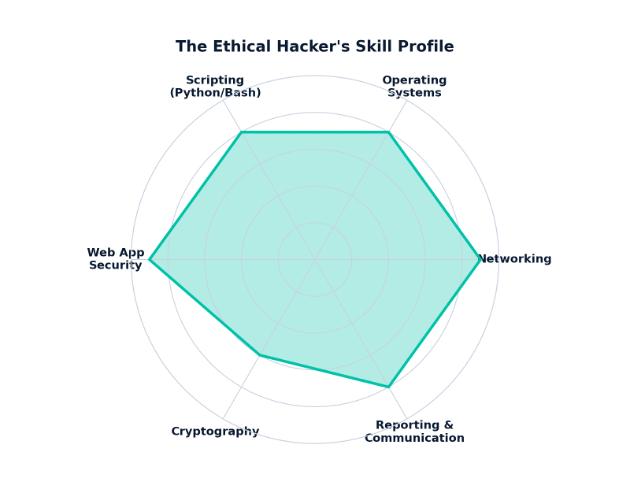
• Networking: TCP/IP, DNS, HTTP, firewalls, and how traffic really flows.
• Operating systems: Linux (especially Kali or Parrot) and Windows internals.
• Scripting: Python and Bash to automate and build your own tools.
• Web security: the OWASP Top 10, such as injection, broken access control, and misconfiguration.
• Soft skills: report writing, communication, and, above all, ethics.
The Ethics That Define the Profession
Ethical hacking stands on trust. Always follow these rules:
• Get written authorization before testing anything.
• Stay within the agreed scope and rules of engagement.
• Protect any sensitive data you come across and never keep or misuse it.
• Report findings responsibly, giving owners time to fix issues.
• Know the law: in India, the IT Act, 2000 governs unauthorized access, and other countries have their own equivalents.
Final Thoughts
Ethical hackers are the immune system of the digital world. They turn attackers' methods into defenders' strengths, help organizations fix weaknesses before they are exploited, and give thousands of curious people a meaningful, well-paid career. If you love solving puzzles and want your curiosity to protect others, ethical hacking is a path worth taking.
The next breach may never happen, because an ethical hacker found the door first.
Popular Certifications
Certifications are not everything, but they help you get past hiring filters and give structure to your learning. Here are some well-known options:
Information and Cyber Security Analysts (AI Integrated) - By SHRM Skills. This covers the entire value chain of cyber security including ethical hacking
CEH (EC-Council) - Broad ethical hacking tools and methodology. Entry to mid-level; widely recognised by employers
Want to become an AI ready cyber security professional? Explore our flagship program.
Sources and Further Reading
Hack the Pentagon: US Department of Defense news release NR-228-16 (17 June 2016); Dark Reading, “'Hack the Pentagon' Paid 117 Hackers Who Found Bugs in DoD Websites” (21 June 2016); HackerOne, hackerone.com/hack-the-pentagon.
Jeep Cherokee: Associated Press, “Chrysler recalls 1.4M cars over hacking concerns” (July 2015); Dark Reading, “Chrysler Recalls 1.4 million Vehicles After Jeep Hacking Demo” (25 July 2015).
Hospira infusion pumps: Help Net Security and MDDI Online coverage of the FDA safety communication of 31 July 2015; CNN Money, “What if the technology meant to save your life could be used to kill you?” (June 2015).
Kevin Mitnick: CSO Online, “Infamous hacker Kevin Mitnick dead at 59” (July 2023); Fortune, “Kevin Mitnick, the world's 'most wanted' hacker before becoming a cybersecurity consultant, dies at 59” (20 July 2023).
Comments